
Too Much Bones
The desert laughs at your certainties

**Audio Version**
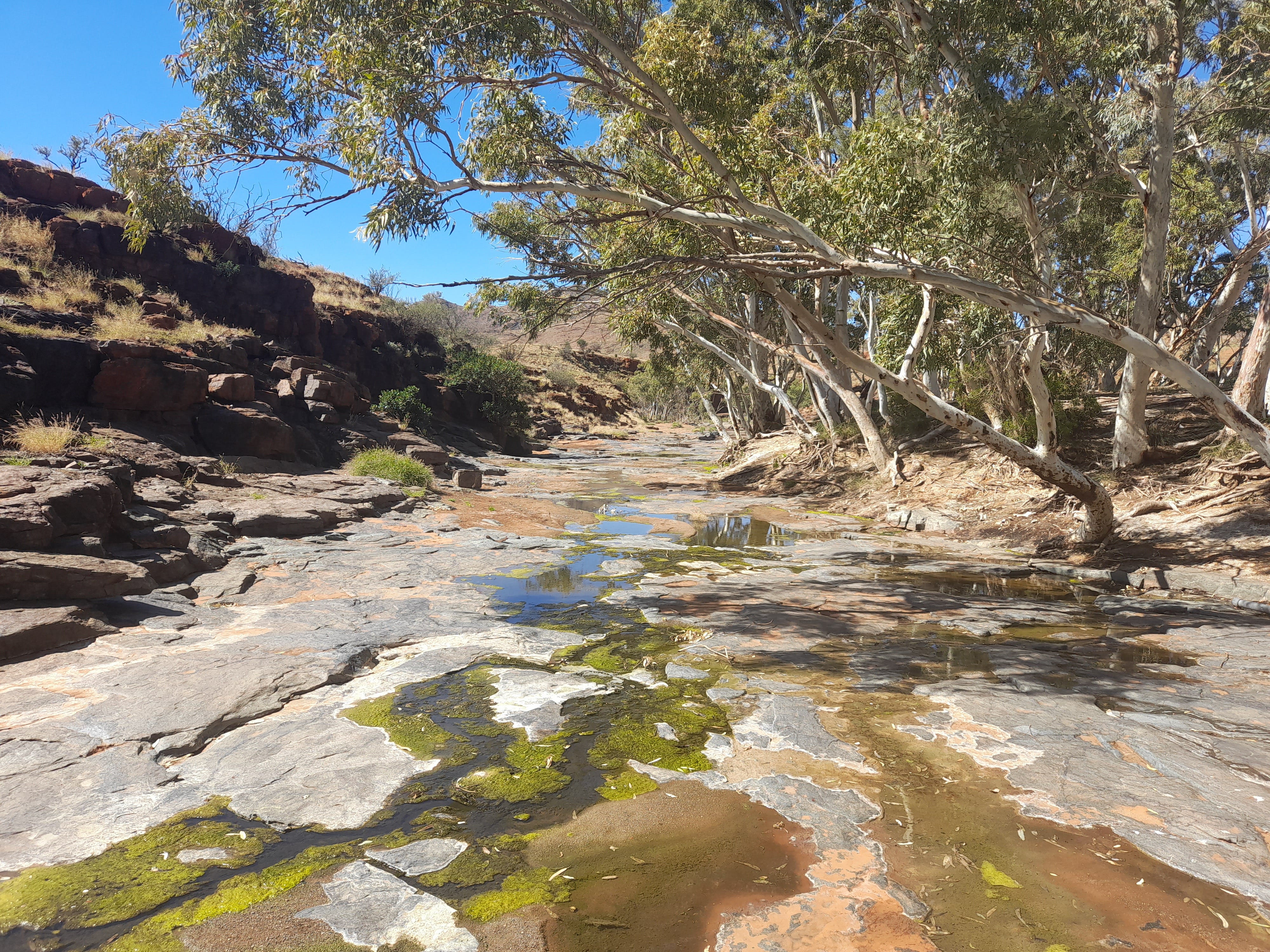
I had to travel out to Apara, a desert spring nestled in a circlet of raw, red mountains. The water is not prolific, but in that place it is a rare gift, supporting some impressive trees and many, many birds and other wildlife. It is also a magnet in the dry times, for horses, donkeys and camels. The horses and donkeys are regular visitors, living as they do around the mountains, reliant on the waterholes, large and small that occur here and there on the creeklines. The camels are usually comfortable far out in the sandhills, living on dew, the moisture in the plants they eat and the occasional rain. But in the dry times, they smell the water and congregate in huge, rapacious herds, eating everything, trampling everything, waiting in agitated ranks for their turn at the meagre, but life-giving flow of water.
I was there to talk with Traditional Owners about how the feral animals could be fenced out to protect this beneficent, and sacred spring. But that is not the story.
I went out early. I had waited near Amata for hours for the right people to turn up, and now I was sick of it. So, I drove the slow eighty kilometres, southward, westward and then northward again, to end up only a few hours walk to the west of where I had been waiting all that time – the other side of a mountain range. I lit a small fire and boiled the billy. Cup of tea done, and no-one yet caught up, I went for a walk.
The spring area was in the bed of a small creek, much of it flat sheets of bedrock, with the water welling up through gaps between these pavements. It was all a mess. Some years earlier, the land management people had built a fence of steel post and cable in an effort to keep the feral animals out. The sheer bulk of animals, inflamed by a terrible thirst had brought large sections of this fence down. And a few months before my visit, a tumultuous rainstorm that washed away most of the roads in that region also turned that dry creek into a torrent, uprooting huge trees and braiding smashed branch with cable and steel post, sand and who-knows-what. Well-worn pads led through the snarl to the water, and I saw tracks of kangaroo, horse, donkey and camel.
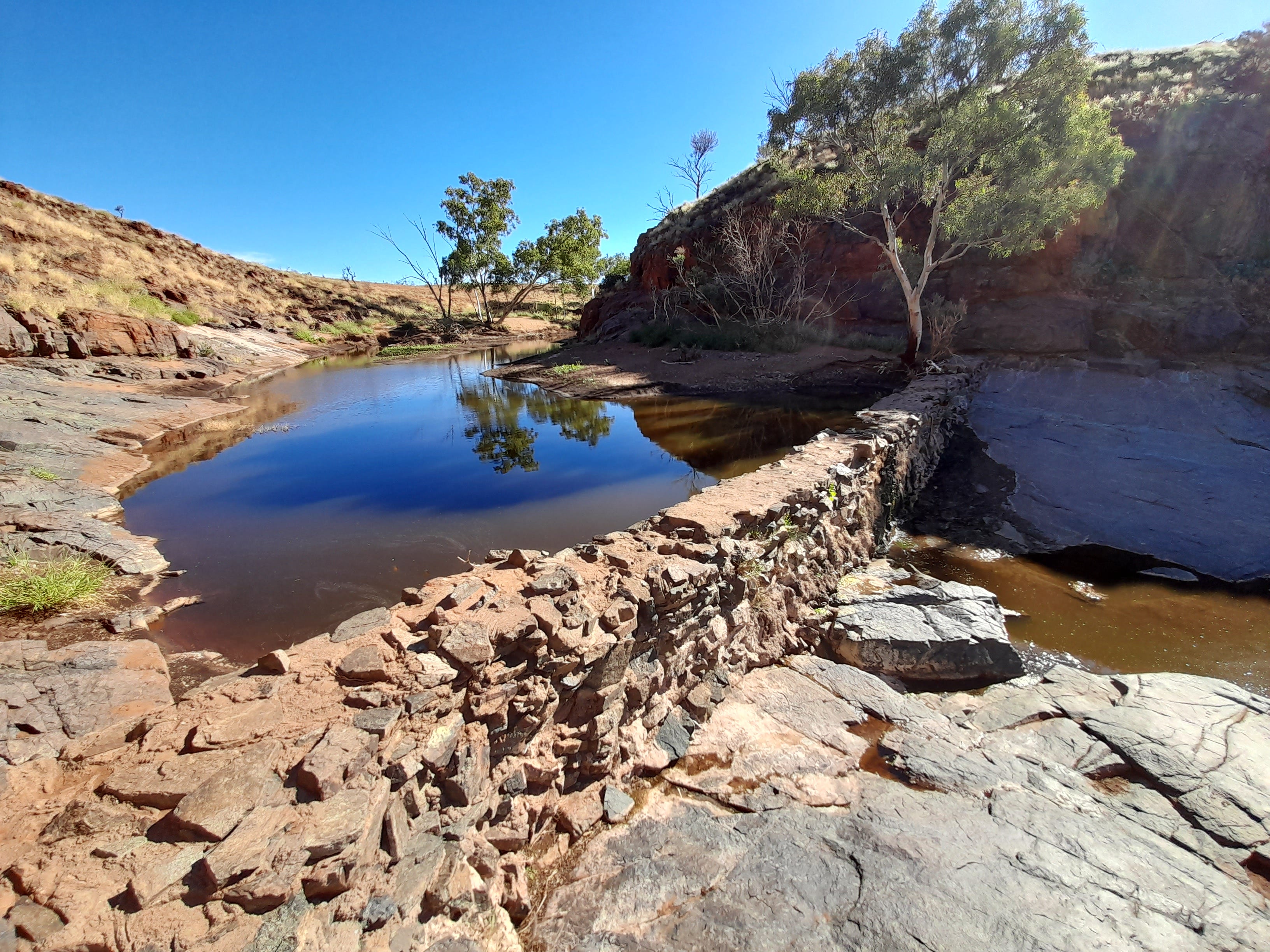
At the northern end of the spring area, I came to a low hand-built stone weir, an effort to retain enough of the spring water to support a small cattle grazing enterprise in some recent past where hope for autonomy, and a willingness to live in such a remote place still persisted.
Bending back toward my car, on the eastern side, I came to a place littered, no…piled with bones. White, bleached bones of camels, horses and donkeys. I walked amongst them, my gait stilted by my need to find clear ground on which to place my feet, so as not to stumble or trip on a femur, skull or back-bone. This was the boneyard of a helicopter cull a few years back. Hundreds of animals, slaughtered ‘to waste’ as it is said, and their bodies piled up to be half burned, and what remained scoured clean by dingos and ravens.
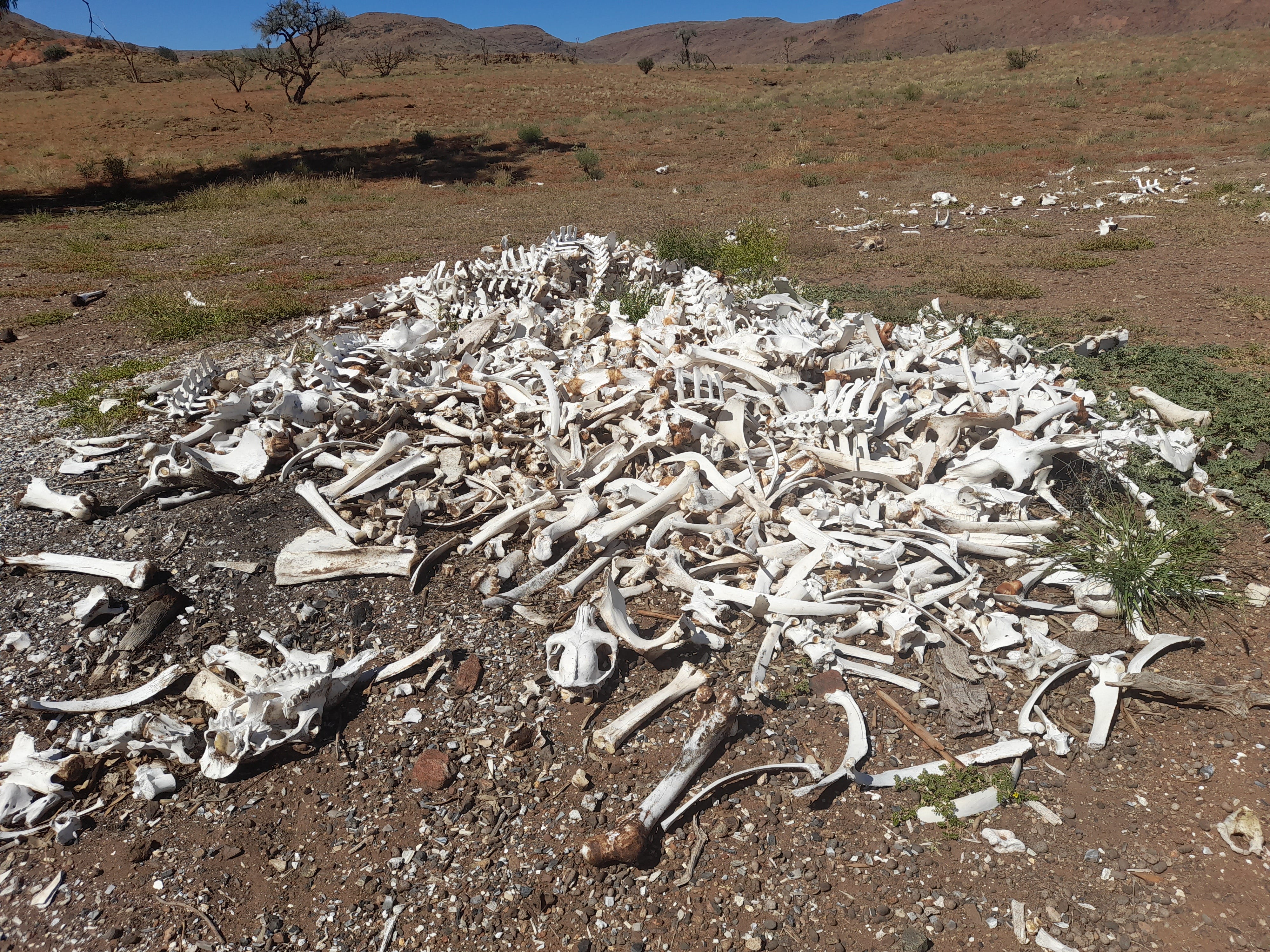
A small part of the ‘boneyard’
Now, I have no love of feral animals. I know the damage they do to these fragile ecosystems. I do have a love of camels, but I also know that the feral camel problem in Australia is growing out of control, with estimates of over a million of these very large herbivores roaming the deserts, and the population doubling every seven years. Something has to be done. But this. This?
As I walked through that boneyard, I started with a matter-of-fact state of mind…which was a camel skull, which a donkey? Wonder at the sheer numbers that had congregated in that place, seeking water, but finding instead, death. But before long I was overcome by a deep sense of sorrow that seemed to be rising miasma-like from the ground, or from the bones themselves. At first it seemed that this feeling arose from my own thoughts, a sadness that all these animals had to die. But it grew, and grew, to the point of physical pain, and I found myself stooping, stumbling, trying to get out of that place. That feeling clung to me like the smell of acrid smoke for a long time. I can feel it even now, just by thinking about it, writing about it. It is a hollowness, somewhere in the guts, somewhere below the solar plexus, but back, close to the spine. It centers there, but it bleeds easily into the body, into the thoughts, a stain that won’t wash out, but won’t stay put either.
Many years ago, it was my job to help look after those lands. The camel problem was small then, and I talked to traditional owners about it. About the damage these creatures do to rockholes and trees, about how some people were getting seriously injured as they drive at night along desert roads in small sedans and hit a camel, which due to its long legs, can roll up and over the bonnet, a tonne of flesh and bone landing on the windscreen. People were being maimed and killed. We talked about how we might ‘get rid’ of them. About helicopter culling. And the people said: “But there will be bones everywhere”. They said that we should muster all the camels, and take them somewhere else, to someone else’s country, and kill them there. “Let the bones lie other place”, they said.
So now I understood. A bit.
Years on I am still troubled by this event. Not because some animals were killed and their bones lay upon the ground, but because that place woke a part of me to a reality that I had only fleeting awareness of. It was one of those moments when the world is revealed to be very much more complex than we have been led to believe: than the simple, orderly material existence that we build our everyday lives around. In that simple vision, there is life, there is death. There is a one-way threshold. There is the past, there is the future. And there is a one-way threshold we call now. There I stood, and here I stand years later, feeling bodily some fearsome tearing of the fabric of the world - something I could not deny or completely escape, however much I wanted to.
As much as I tried, as much as I try, to understand, to build a theory to explain this event, I come up short. My upbringing and education just do not equip me well for things like this. The reality of what I felt is undeniable - the question is whether by rendering the experience into one of mind - psychologising it - I am diminishing it and losing something crucial? Something that might transform my relationship with the World. You can’t live for long in Aboriginal country and not have your simplistic linear preconceptions recurved, twisted and tangled. The desert laughs at your certainties.
What do I think now? I fear, years on, that I failed in that moment. A better, stronger, wiser person would perhaps have sat with that terrible feeling and asked what was needed. Violent death, I suspect, wounds the fabric of the World, leaving an energetic pitfall that captures the unwary: Those who pass that way are called to give a little of their life to the healing. But who has that much to give?
Years later, I remain haunted. And that was ‘just’ animals. How must it have felt beside the pits in Srebrenica? How must it feel in Gaza?
Yes, 'the world' is pretty tight on security when it comes to thought. 'It could (always?) be either'. There are places I will not go, and more I will not linger long. Even 500 years on unease hung close to Flodden Field when we came to live within range.
I have a guess though that good lives, and how do you define that(?), will redeem a landscape, and some places it comes up like a well-spring.
What about sterilization?